
Finding St. Cloud Residents
St. Cloud has no single public roster of everyone at every address. A useful residents directory search matches the question to the record. Property systems are best for a parcel or named owner. Court, marriage, and obituary indexes help confirm an identity or a life event. Older household questions belong with the library directories and newspapers. Each source has a different scope, so compare details instead of treating one name match as a conclusion.
Start with the strongest fact you already have. An exact address can lead to a parcel and a recorded deed. A full name plus a date can narrow a court or marriage result. An older street number may need a directory, map, or historic street-name crosswalk before it resembles a modern address.
- Search the county or city property system by owner, street address, or parcel identifier.
- Use the parcel record to separate the physical address from the owner’s mailing address.
- Check an official identity record that fits the question, such as MCRO, MOMS, or the obituary index.
- Follow a deed party through LandShark when ownership history matters.
- Ask the holding office, library, or archive for an index year or file that is not online.
St. Cloud Resident Records Offices
Three local offices create the core of a St. Cloud residents directory trail. The Recorder connects people to recorded land instruments. The Assessor and county property systems connect a parcel to its current tax record. Elections staff manage voter information under Minnesota’s separate access rules. Court and vital-record custodians answer different questions, but they should be used to confirm a record rather than to guess at a person’s address.
Stearns Recorder / Registrar
3301 County Road 138
Waite Park, MN 56387
320-656-3855
LandShark land records
St. Cloud Assessor
1201 7th Street South
St. Cloud, MN 56301
320-255-7203
City property search
Stearns Elections Office
705 Courthouse Square
St. Cloud, MN 56303
320-656-3920
MNVotes registration lookup
St. Cloud Property Search
The county property search accepts any part of a parcel identification number, a property address, or an owner name. The city map uses physical address, PIN, STC Geocode Service, or ESRI World Geocoder. A city map PIN is entered without punctuation. After selecting an autocomplete result, the city map opens a parcel window with report buttons. The two interfaces are worth checking because a St. Cloud address may behave differently in municipal and county records.
| Search control | St. Cloud use |
|---|---|
| County Search | Any part of an owner name, property address, or parcel ID |
| City criteria | Physical address, PIN, STC Geocode Service, or ESRI World Geocoder |
| Parcel result | Owner, situs address, mailing address, value information, and available reports |
The St. Cloud Property Search shows the city’s map instructions and criteria choices.
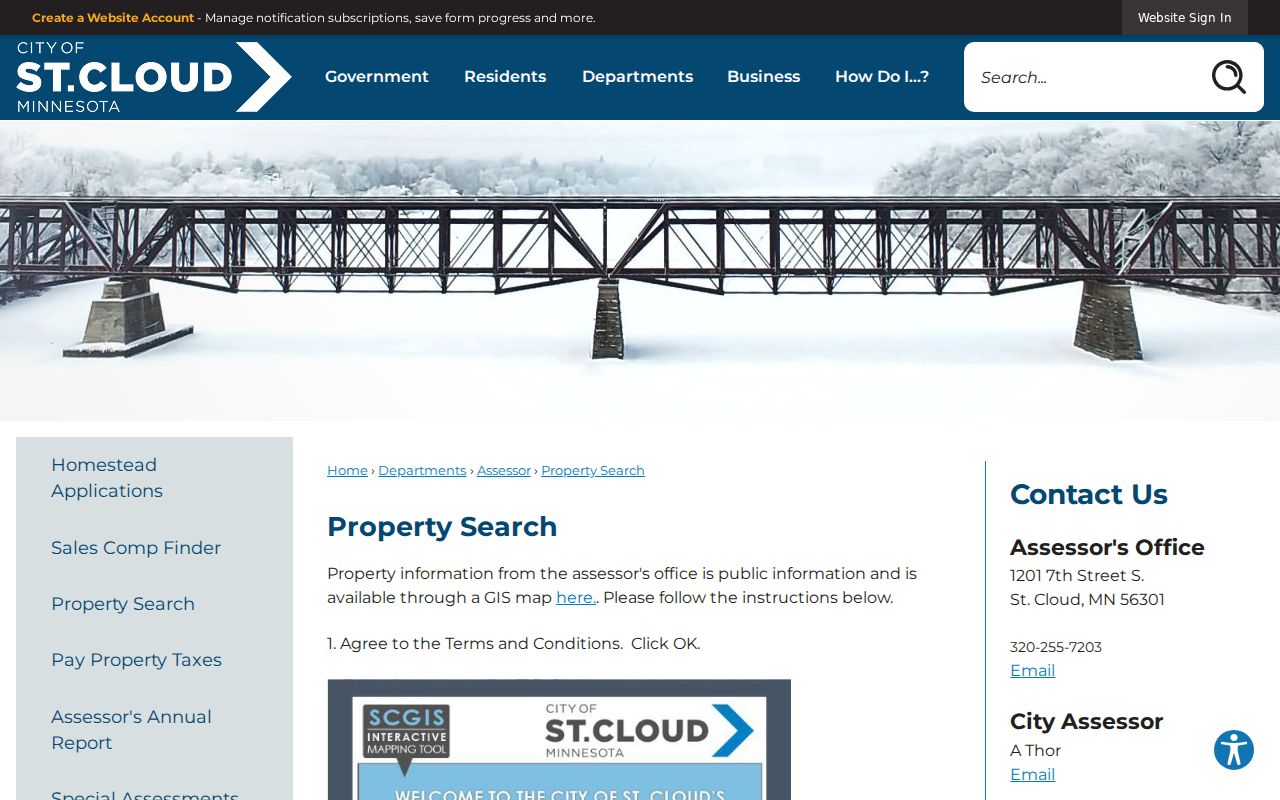
A parcel result is evidence about real estate, not a list of everyone who may live there. The situs address identifies the parcel; a mailing address can point somewhere else.
The Stearns County Property Viewer adds map-based parcel context and an Owner, Resident, or Both choice for its mailing-label tool.
The viewer’s resident label is a property-address field and may not be postal-valid. Its owner label is a mailing clue that can be outside the parcel ZIP or even outside Minnesota.
St. Cloud Deed Trail
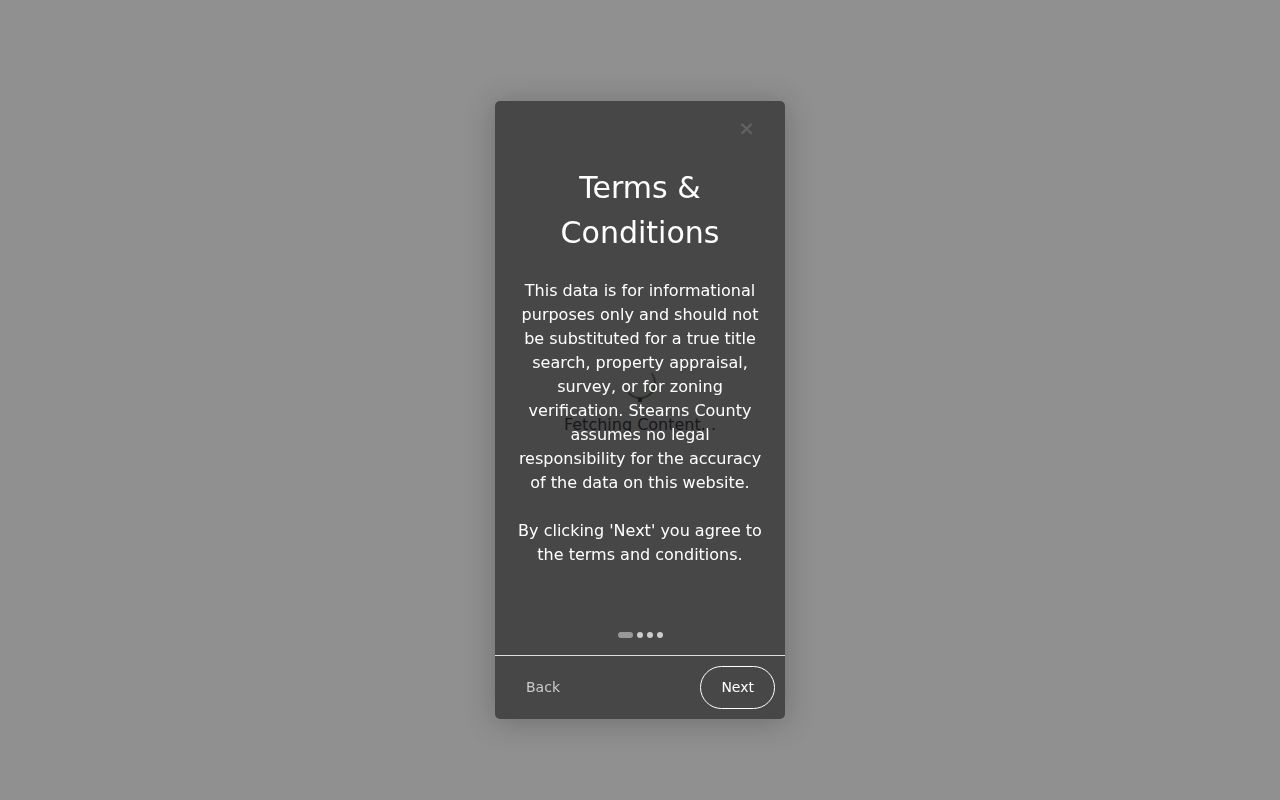
Stearns County’s LandShark archive reaches back to 1855, although historical conversion remains ongoing. The index ties grantors and grantees to instruments and legal descriptions. For an older address, the legal description, lot, block, subdivision, parcel number, or Torrens reference is often more durable than the present street wording. Begin with the current owner’s acquisition instrument, then search the earlier seller as a grantee while keeping the legal description in view.
The LandShark information screen documents its account routes, archive statement, and access terms.
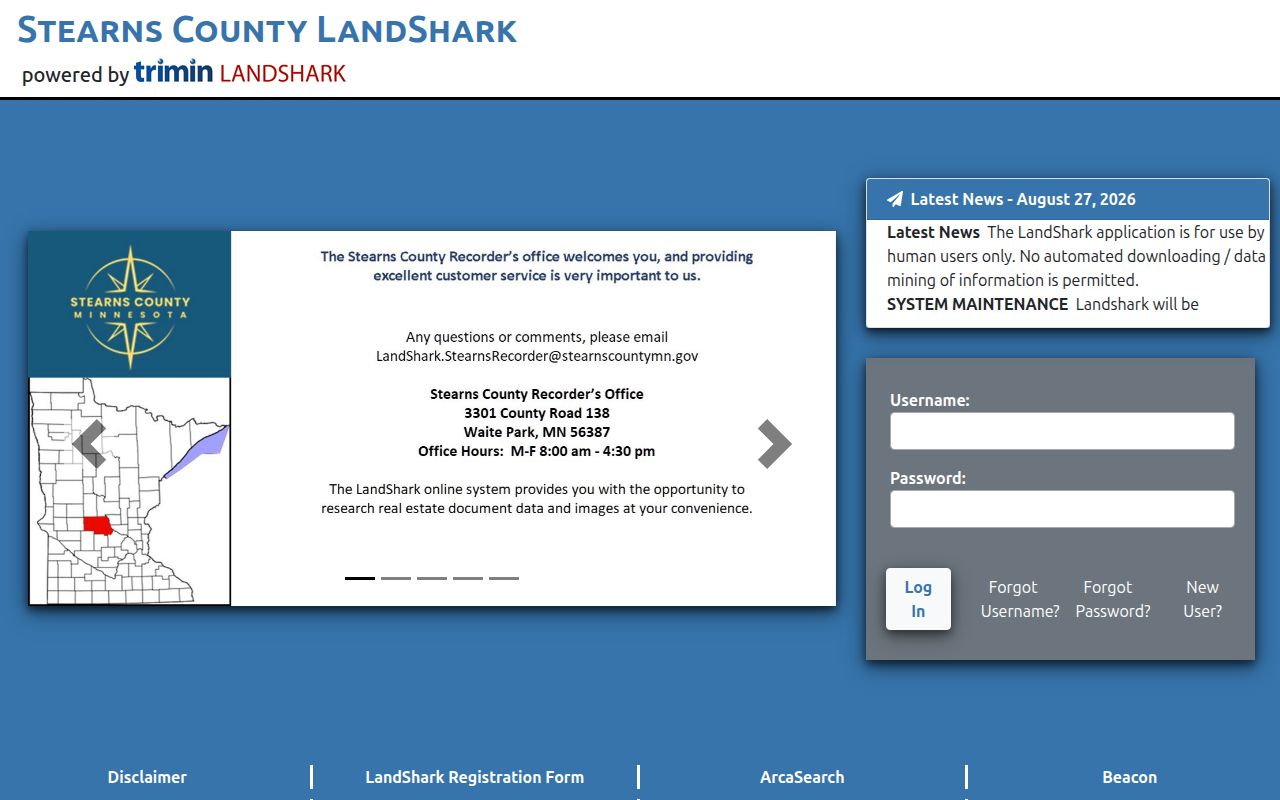
Occasional access is listed at $10 per session with $4 document images, while monthly access is listed at $50 with $2 images. The Recorder’s integrated counter system is the fallback when an image or older record is not available online.
- Parcel
- A defined piece of land tracked in the property system.
- Index
- A finding tool that points to a record; it is not always the record image.
- Criss-cross directory
- An address-first directory arrangement that can lead to an occupant clue.
- Legal description
- The lot, block, subdivision, or other land description used to keep a deed chain continuous.
St. Cloud Voter Records
MNVotes is designed for a person to check that person’s own registration. It requires first name, last name, birthday, and a complete address path through ZIP code or county, city or township, house number, street, and unit when needed. The display updates nightly, and a recent registration application can take up to the stated processing period before it appears. It is not a public tool for browsing a whole street.
The MNVotes registration form shows the required identity and address inputs.
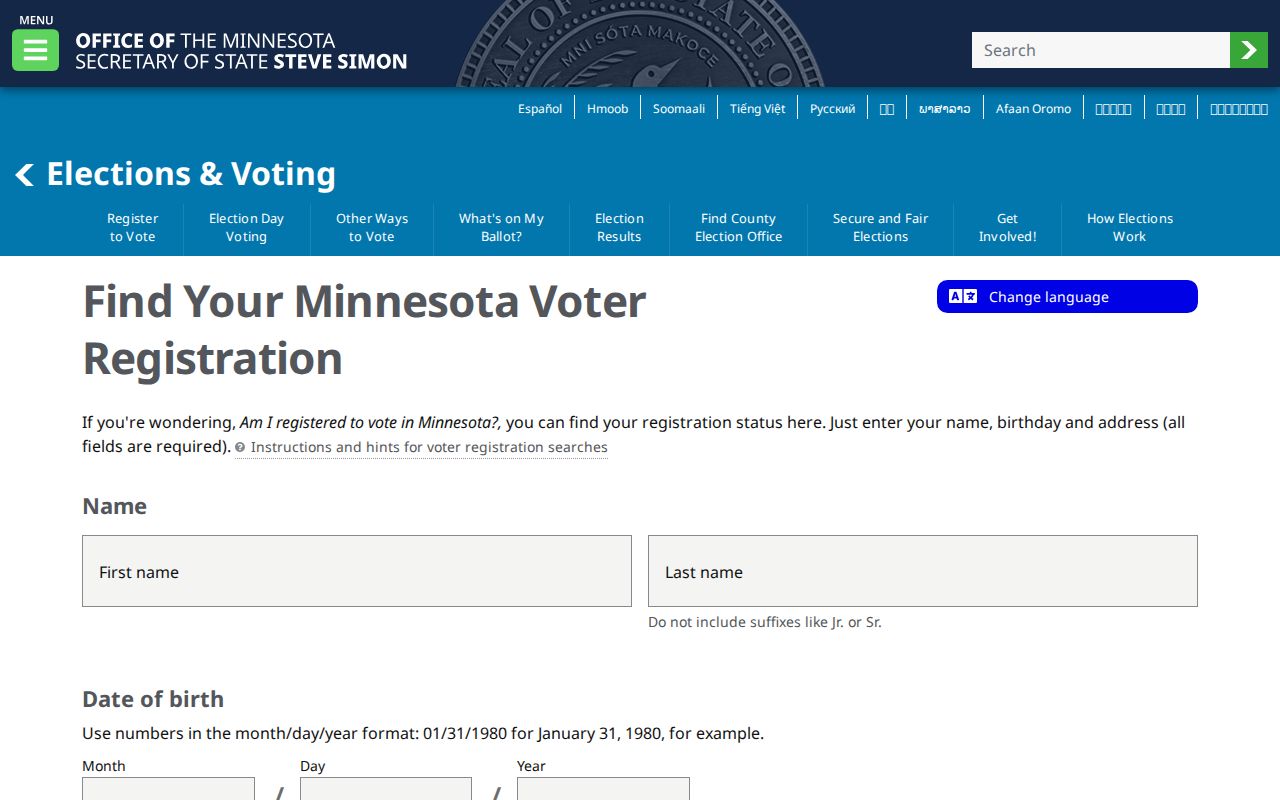
Minnesota Stat. § 201.091 separately governs the public voter-information list. That route can include name, address, year of birth, and voting history, but it requires identification and a written permitted-use statement. Dates of birth, government ID numbers, and protected names are not part of the public list.
Current St. Cloud Resident Directories
Current sources have sharply different audiences. The property roll identifies owners and parcels. LandShark identifies parties to recorded instruments. The public voter-information list has its own statutory access route. A business filing, professional license, or unclaimed-property result may identify a name association, but none of those records proves a present home address on its own.
| St. Cloud source | Resident evidence | Custodian | Access route |
|---|---|---|---|
| Property records | Owner, parcel, situs and mailing addresses | Stearns County / City Assessor | County and city property search |
| Recorded instruments | Grantor, grantee, document date, legal description | Recorder / Registrar | LandShark or counter |
| Voter information | Legally limited name and address information | County Elections / Secretary of State | Written certified-use route |
| Professional and business records | License or filing details where published | Minnesota agencies | State index and record custodian |
For a single person, begin with a name-plus-address confirmation rather than trying to make one directory source do every job. The local records differ most in what they do not show, especially people who are not owners or are protected by law.
St. Cloud Court Name Search
MCRO searches Minnesota district court records by name, case number, citation number, or attorney. In name mode, a trailing wildcard can be used after two characters, while the Sounds Like option cannot be combined with a wildcard. Date of birth, date filed, category, status, and the Stearns county selector can narrow a common name. Always read the Register of Actions before deciding what a case entry means.
The MCRO Case Search displays the name, date, category, and location controls.
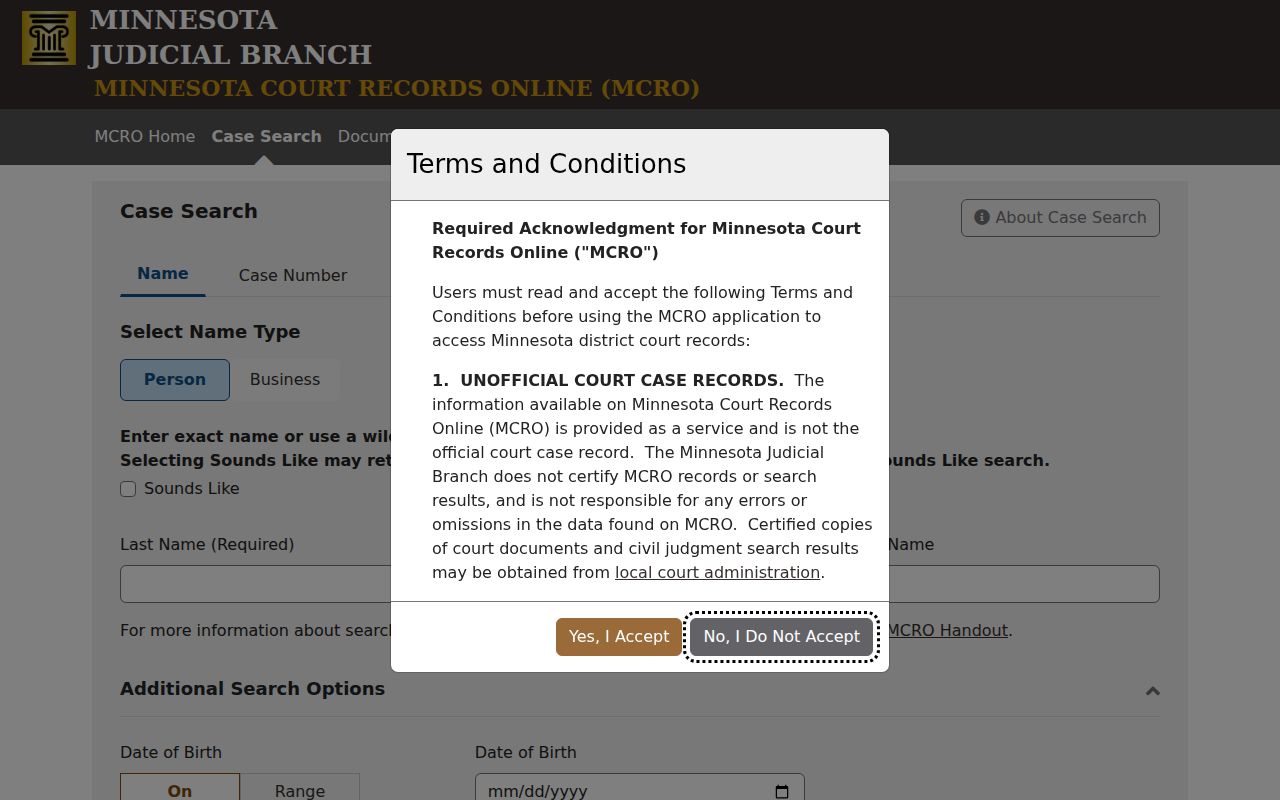
A result can show a case number, court location, category, status, hearing information, judgments, public documents, and the Register of Actions. MCRO is not a certified record. Remote access omits several classes of material, and courthouse public terminals or the District Court Administrator may supply a fuller lawful access channel.
St. Cloud Vital Record Channels
Marriage, birth, death, and divorce questions go to different Minnesota custodians. MOMS indexes participating county marriages and helps identify the county that holds a certificate. Birth and death requests use Minnesota Department of Health or county-vital-office routes, with different public and certified-copy rules. A divorce decree comes from the district court that granted it. Stearns County has local birth and death records beginning in 1870, while MDH statewide records begin later for those record types.
The Minnesota Official Marriage System offers county selection, applicant names, date ranges, exact, starts-with, and sounds-like options.
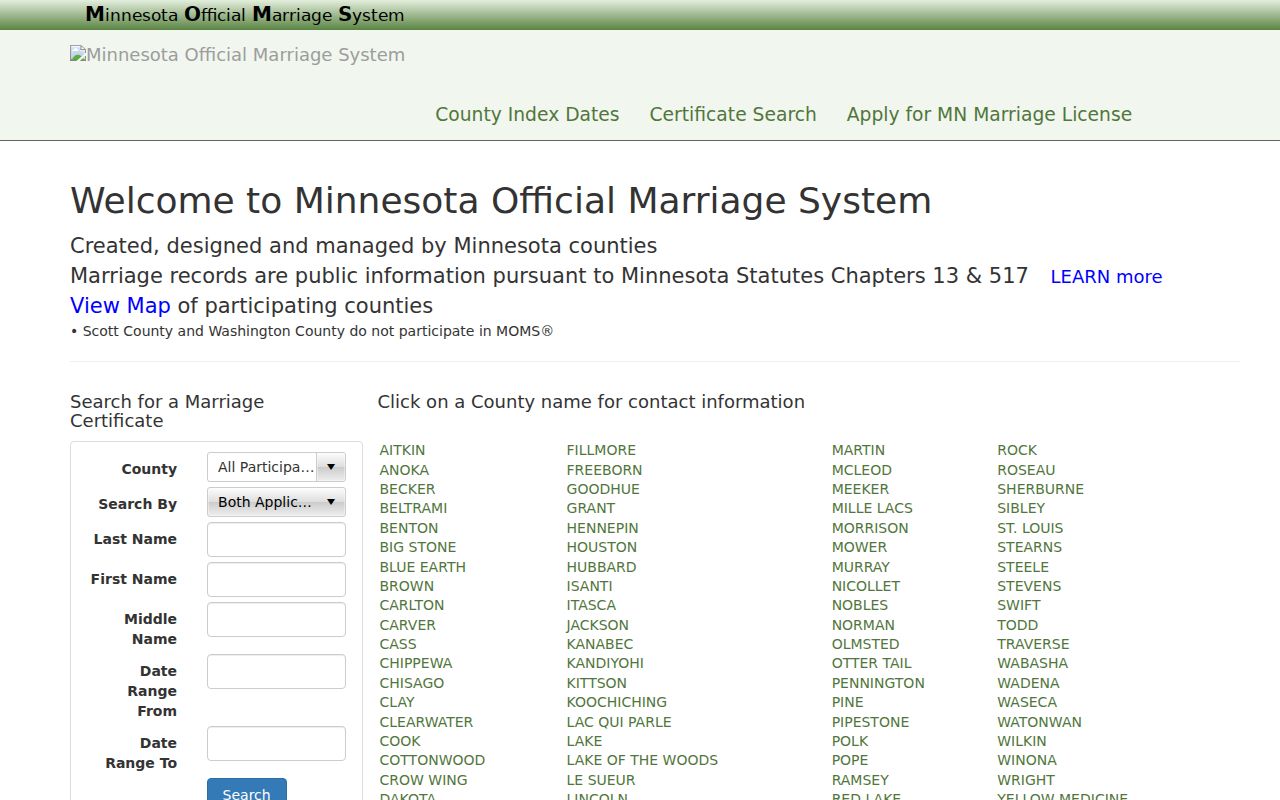
Marriage index results identify a potential event and custodial county. They do not replace a certificate request from that county.
The Minnesota Vital Records service explains county-office, mail, and form-based channels.
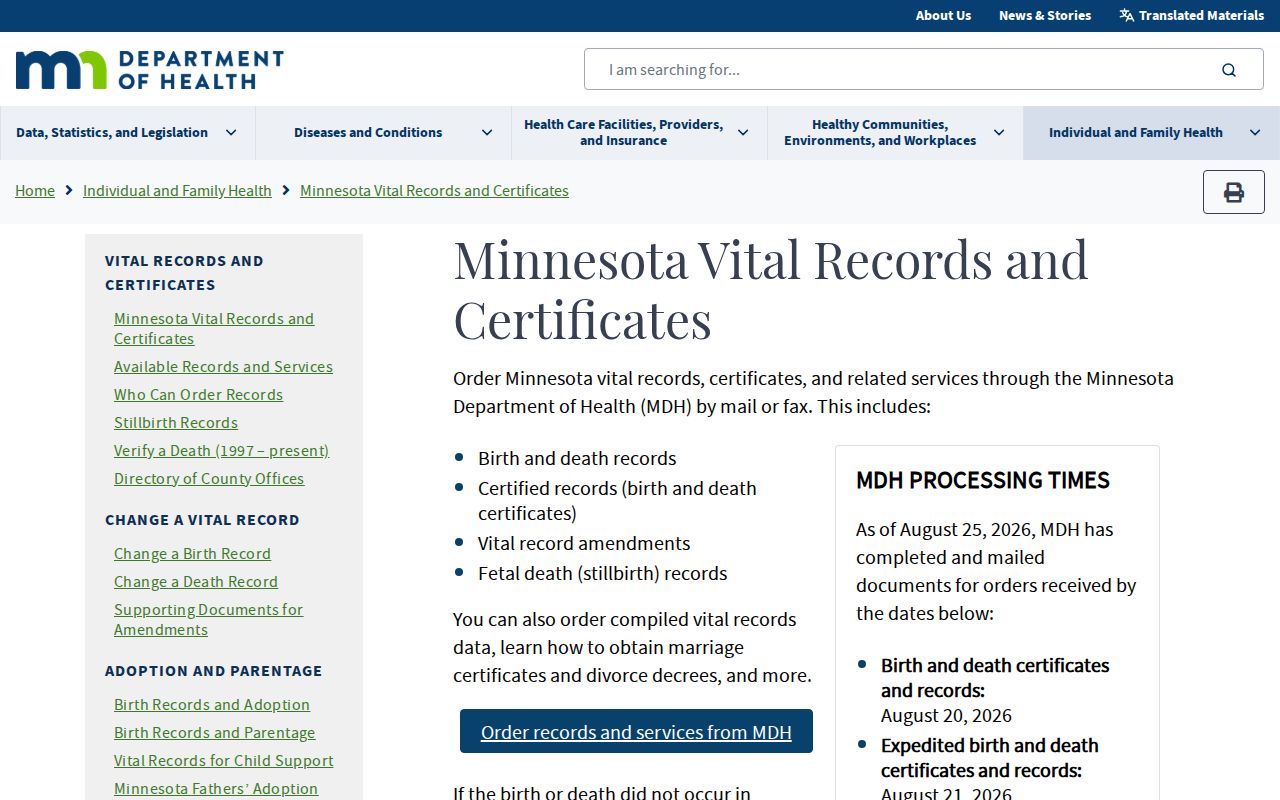
All death records are public for noncertified informational copies. Birth access depends on the record’s classification and requester eligibility. A mailed or faxed vital-record application can require notarization, and incomplete requests are returned.
St. Cloud Obituary Index
Great River Regional Library’s St. Cloud Times obituary index covers September 27, 1887 through December 31, 2019. Search results can give a name, publication date and page, spouse, or alternate name. That makes it useful when a surname changed, a directory entry disappears, or an estate trail needs a date. The index does not guarantee that the full obituary is online.
Use the St. Cloud Times index to identify the issue, then request microfilm help through Ask a Librarian or a local branch. Newspaper text can add context, but a property or court record should still confirm the address or relationship at issue.
Historical St. Cloud Resident Directories
The Minnesota Digital Library provides free scans of St. Cloud directory runs for 1888-89, 1892, 1894-95, 1896-97, 1897-98, 1899-1900, and 1901. The 1896-97, 1899-1900, and 1901 titles also include Sauk Rapids and Waite Park. Great River Regional Library, St. Cloud Public Library, the Stearns History Museum, and archives remain useful when an intervening year or a physical volume is needed.
An entry may record a name, occupation, employer, street number, spouse or household notation, and sometimes an owner or renter mark. It is an occupant clue, not proof of title. The St. Cloud directory book gives the collection years and a household-tracing method in greater detail.
St. Cloud Address History
Historic address research needs local geography. Upper Town, Middle Town, and Lower Town united in 1856, and older sources can use names that do not look like a current property result. In the 1869 historic context, Washington Avenue South appears as 5th Avenue South and Richmond Avenue as 6th Avenue North. Those are specific crosswalks, not evidence of a citywide renumbering at a known date.
St. Cloud’s five designated historic districts also provide a building-era layer. Pantown is especially useful because its Pan Motor Company homes were built in 1917 through 1919. Pair a historic district study, old directory, Sanborn map, and parcel record before deciding that two similar address forms describe the same property.
St. Cloud Privacy Boundaries
Minnesota’s Government Data Practices Act presumes government data public unless a law classifies it otherwise, but that rule does not turn every requested detail into an open resident record. Safe at Home participants have an assigned confidential address, and voter names may be withheld for safety. Court, vital, driver, and law-enforcement data also have record-specific limits.
A written request should name the record, location, and date range precisely, and it may ask to inspect, obtain copies, or both. Under the Minnesota Government Data Practices Act, a custodian need not create a new list or reformat a paper-only record into a new electronic product.
St. Cloud Land Alerts
Stearns County offers Land Notification, a free alert service for recording activity that matches a subscribed person, business, or property. It is a practical safeguard for an owner who wants notice of a new filing. The county also warns that deed-copy solicitations can resemble official bills while charging for a copy that can be ordered through the recorder’s own channels.
The Land Notification service describes the name, business, and property subscription options.
Keep the recorder’s contact information with any alert. The LandShark maintenance notice for late August and early September 2026 is a reminder that the Recorder counter and Land Records Management system remain important access routes when a portal is unavailable.
St. Cloud Records Fallbacks
When a search result stops short, use the custodian that holds the underlying record. The Recorder counter can help with older land material. Courthouse terminals can display more than remote MCRO access. The county vital office, MDH forms, and issuing county each serve different certificate requests. Library staff, microfilm, the Central Minnesota Historical Collection, and the Minnesota Historical Society extend the historical trail.
Minnesota eLicense is another official state route for a professional license question. It organizes licenses, permits, registrations, and certifications by topic, agency, name, keyword, and A-Z listing. Use a result as one confirming record, then contact the listed agency for the underlying file or current status.
The Minnesota eLicense search also provides the state’s topic and agency browsing surface.
License information is agency-specific. A published credential can confirm a professional record, but it does not by itself confirm a person’s current residence.
For an address-driven question, the St. Cloud street directory follows the parcel and deed sequence from one street outward. That method is more useful than a broad name search when the address is the known fact.